
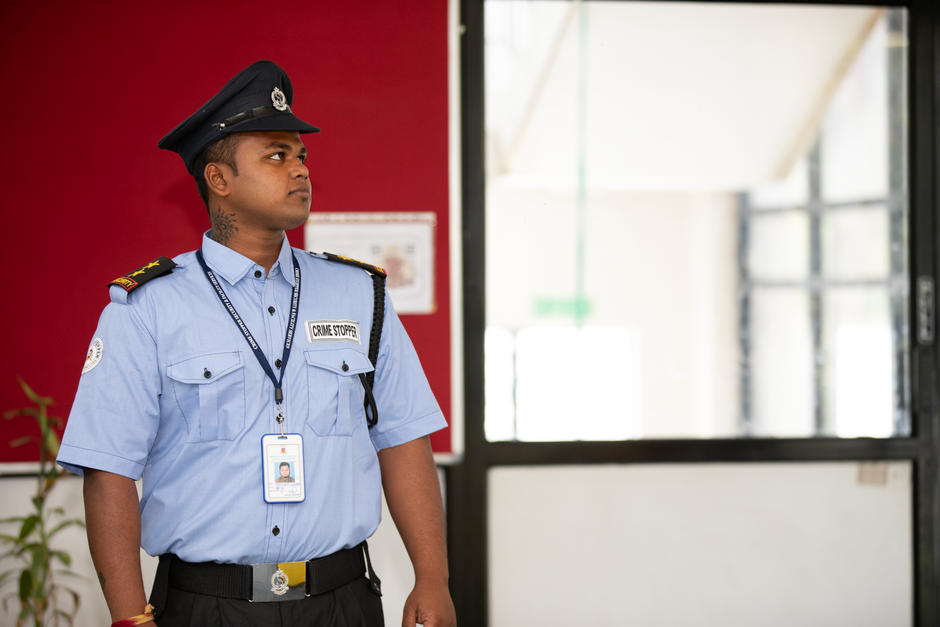
Why Learning to Check a Security Licence Is a Smart Personal-Safety Habit
Taking charge of who enters your home, your event, or your supported living environment is one of the most empowering things you can do for yourself and the people you care about. Learning to check a security licence before welcoming any guard onto your property is not about suspicion — it is about informed, confident decision-making. Just as we verify credentials in almost every other area of life (think about how governments around the world, from licence systems like Driving licence in Pakistan to local authority registers, use formal credentialling to protect the public), verifying a security worker's authorisation is simply good practice.
Empowerment Starts With One Simple Question
For participants in supported living and community programs — especially those who rely on NDIS services — the people coming through your door matter enormously. Personal growth includes recognising that you have both the right and the responsibility to ask, "Can I see your licence?" That single question:
- Confirms the guard is legally authorised to work in your state or territory
- Signals to service providers that you are an active, engaged participant in your own safety
- Builds the habit of self-advocacy — a core skill in any personal-development journey
- Creates a safer community for everyone around you
Checking credentials is not confrontational; it is courteous and professional. Licensed guards expect it, and reputable security companies welcome it. Think of it the same way you would check that your support worker holds a current NDIS Worker Screening clearance — a straightforward step that protects your wellbeing and reinforces your right to person-centred, participant-led care.
Why You Should Check Security Licence Details Before Trusting Any Guard
Knowing how to check security licence information is one of the simplest yet most powerful steps you can take to protect yourself, your household, or the people in your care. Whether you are running a community event, welcoming support workers into a vulnerable person's home, or managing access to a shared living environment, the guard or security professional at your door carries real authority — and that authority should be verified, not assumed.
Consider what is actually at stake when you skip this step:
- Unlicensed individuals can impersonate guards. A uniform and a confident manner are easy to replicate. A valid, government-issued licence is not.
- Expired licences signal lapsed training. Security personnel are required to maintain ongoing training in areas like use-of-force protocols, emergency response, and privacy obligations. An expired licence may mean those skills are out of date.
- Your duty of care depends on it. For NDIS participants, carers, and support coordinators in particular, allowing an unverified person to enter a supported living space could constitute a serious safeguarding failure.
- Fraudulent operators do exist. Rogue security contractors have been prosecuted across Australia for operating without a licence — often targeting residential properties and small community events where checks are least likely to happen.
Taking a moment to verify credentials is not about distrust — it is about informed, responsible decision-making. Just as a good support provider like Innergrowth Hub conducts thorough screening before placing staff with participants, you have every right — and responsibility — to apply the same standard of scrutiny to anyone claiming a security role in your space.
Personal safety starts with asking the right questions. Checking a licence is one of the most direct questions you can ask.
Your Right to Check a Security Licence Is Self-Advocacy, Not Suspicion
Knowing how to check a security licence before granting someone access to your home, event, or care environment is not an act of distrust — it is a confident, informed decision that puts you in control of your own safety. At Innergrowth Hub, we talk a great deal about participant-led support and the power of self-determination. That same empowered mindset applies just as strongly to the people you allow into your personal space.
There is a common misconception that asking a security guard for credentials is rude or confrontational. In reality, it is entirely the opposite. Licensed security professionals in New South Wales are trained to expect and respect credential checks. Requesting verification signals that you are an engaged, aware individual — exactly the kind of person who is harder to take advantage of.
Reframing Verification as a Strength
Consider how this principle already shows up in everyday life. You check a tradie's insurance, you confirm a care worker's qualifications, you verify a driver's identification before getting in a vehicle. Verifying a security licence belongs in exactly the same category — a routine, responsible step that protects you and the people around you.
- It is your legal right to ask any security operative for proof of their current licence before they enter your property or event.
- It protects vulnerable people in your care, including children, elderly family members, or NDIS participants in supported living settings.
- It holds services accountable, encouraging security companies to maintain proper standards across their workforce.
Choosing to verify is not paranoia — it is the same quiet confidence that comes from knowing your rights and acting on them. The more normalised this behaviour becomes in our communities, the safer everyone is.
The Hidden Risks of Skipping a Simple Verification Step to Check Security Licence
Failing to check security licence details before allowing a guard onto your property or event is not a minor oversight — it is a decision that can carry serious consequences for everyone involved. Whether you are a homeowner, an event organiser, or someone responsible for the safety of vulnerable individuals in a care setting, the risks of skipping this one straightforward step are far greater than most people realise.
- Unvetted individuals gain access to vulnerable people. In environments that support people with disability, mental health needs, or complex care requirements, an unlicensed guard may lack the training to respond safely and compassionately in sensitive situations.
- You may carry legal liability. If an incident occurs involving an unlicensed security worker you engaged — even unknowingly — you could face legal exposure as the person who granted them access.
- Fraudulent credentials are more common than expected. Forged or expired licences are used by individuals who would not pass formal background screening, meaning a quick visual check of a badge is not enough.
- Your insurance coverage could be voided. Many property and event liability policies include clauses that are invalidated when unverified contractors are engaged on site.
- Community trust is damaged. For organisations that support participants in the community — such as NDIS providers — a single safety failure can erode the trust that takes years to build with participants and their families.
The people and communities you care about deserve protection that is verified, not assumed. Taking a few minutes to check security licence status through an official government register is one of the simplest, most powerful ways to reduce these risks before they ever materialise. Personal responsibility starts with this one deliberate action.
What Happens When You Don't Check Security Licence Credentials
Failing to check security licence details before allowing a guard onto your property or event is not simply an oversight — it can trigger a chain of serious consequences that affect your finances, your legal standing, and most importantly, your personal safety. Understanding these real-world risks is one of the strongest motivations to act carefully and verify credentials every single time.
Liability Falls Back on You
When an unlicensed guard is involved in an incident — whether that's an assault, a breach of duty, or property damage — the legal liability can shift squarely onto the person or organisation who engaged them. Because the guard operated without proper authorisation, their employer may also disclaim responsibility. You could find yourself facing civil claims with very little legal protection.
Insurance Voids Are a Hidden Danger
Most public liability and venue insurance policies include clauses requiring that contracted security personnel hold valid, current licences. If an unlicensed guard is working at your event or home and something goes wrong, your insurer may refuse to pay out — leaving you to cover damages entirely out of pocket. This is particularly relevant for NDIS participants and support coordinators who host group activities or community events, where the duty of care obligations are already significant.
Personal Safety Exposure Is Real
Unlicensed guards have not undergone the mandatory training, background checks, or screening that licensed professionals must complete. This means the people they are supposed to protect — including vulnerable individuals — may actually be placed at greater risk by their presence than by their absence.
- No verified criminal history checks before deployment
- No mandated first-aid or conflict-resolution training
- No regulatory oversight if conduct becomes unsafe
Taking a few minutes to check security licence status is a small step that protects you from consequences far larger than most people anticipate until it is too late.
How Licensing Works: What a Valid Security Licence Actually Proves When You Check Security Licence Details
Understanding what sits behind a security licence helps you make sense of the results when you check security licence records for anyone working on your property or at your event. A licence is not simply a piece of ID — it is evidence that an individual has met a defined set of legal and competency standards enforced by the relevant state or territory regulator.
In New South Wales, security licences are issued and managed by NSW Police through the Security Licensing and Enforcement Directorate (SLED). To hold a valid licence, an individual must have:
- Completed approved training — typically a Certificate II in Security Operations covering crowd control, first aid, conflict resolution and legal powers
- Passed a criminal history check — serious offences will disqualify an applicant entirely
- Demonstrated physical and mental fitness for the role
- Been assessed as a fit and proper person under the Security Industry Act 1997
A licence also specifies its class and category. A crowd controller is licenced differently from an armed guard or a monitoring centre operator. When you check security licence information, you should confirm not just that a licence exists, but that its class actually matches the role the person is performing. Someone holding a basic guarding licence is not legally permitted to work as an armed escort, for example.
What a Licence Does Not Guarantee
It is worth noting that a valid licence confirms regulatory compliance at the time of issue and renewal — it does not guarantee good character in every situation. That is precisely why participant-centred communities, including those supported by disability and care services, are encouraged to treat licence verification as one layer of a broader personal safety approach, not a single definitive answer.
What a Licence Actually Represents When You Check Security Licence Details
When you take the time to check security licence information before allowing a guard onto your property or event, you are not simply ticking a bureaucratic box. A valid licence is a genuine quality marker, representing a structured set of requirements the individual has met before being permitted to work in a position of trust and responsibility.
In New South Wales, a security licence is issued by the NSW Police Force through the Security Licensing & Enforcement Directorate (SLED). To obtain one, an applicant must satisfy several meaningful conditions:
- Nationally accredited training: Licence holders must complete a Certificate II in Security Operations (or equivalent), covering threat assessment, legal powers, communication, and emergency response procedures.
- Background and criminal history checks: Applicants undergo a thorough police check, and any serious criminal history will disqualify them from holding a licence. This protects your household, participants, or event attendees from individuals with a documented history of harm.
- Identity verification: The licensing process confirms the applicant is who they claim to be, reducing the risk of fraudulent operators.
- Ongoing compliance: Licences must be renewed regularly, meaning the holder must remain in good standing with regulators over time — not just at the point of first application.
For communities that include vulnerable people — such as NDIS participants, older adults, or individuals with disability — these standards carry particular weight. A licensed guard has been vetted in ways that an unlicensed person simply has not.
Why This Matters Beyond the Paperwork
Understanding what the licence represents helps you appreciate that verifying it is an act of genuine care, not bureaucratic caution. It means the person entering your space has been assessed, trained, and found fit for a role that directly affects the safety and wellbeing of the people you are responsible for.
Step-by-Step: How to Check Security Licence Status in Minutes
Knowing how to check security licence details doesn't require legal expertise or hours of research — the process is straightforward once you know where to look. Whether you're organising a community event, managing a residential property, or coordinating support services, these steps will give you a verified answer quickly.
1. Identify Your State or Territory Regulator
Security licensing in Australia is regulated at the state level. In New South Wales, the relevant authority is NSW Fair Trading. Each state has its own online register, so begin by confirming which jurisdiction applies to the guard or company you're assessing.
2. Visit the Official Licence Register
Navigate directly to the regulator's public licence search tool. For NSW residents, this is found on the NSW Fair Trading website. Avoid third-party lookup sites — always go to the primary government source for accuracy.
3. Enter the Licence Number or Name
Most registers allow you to search by licence number, individual name, or business name. If a guard cannot provide a licence number on request, treat that as an immediate red flag.
4. Confirm These Key Details
- Licence status — active, suspended, or expired
- Licence class — does it cover the specific role they're performing?
- Expiry date — even a recently lapsed licence is non-compliant
- Conditions or restrictions — some licences carry limitations on duties
5. Document What You Find
Screenshot or save the search result with a timestamp. This simple record protects you if a dispute arises later. For organisations such as NDIS support providers — where participant safety is paramount — keeping verification records aligns with the same person-centred accountability you'll see reflected across Innergrowth Hub's services.
If you're ever unsure about safeguarding processes in your care environment, exploring the community participation support framework can offer useful context around structured safety planning.
How to Check a Security Licence: A Step-by-Step Practical Guide
Knowing how to check a security licence properly is simpler than most people realise, and taking ten minutes to do it can make a meaningful difference to the safety of your home, event, or NDIS support environment. Here is a clear walkthrough of the process.
Use the Official Government Register
In New South Wales, security licences are regulated by NSW Fair Trading. Their publicly accessible online licence check tool allows anyone to search by licence number or the individual's name. Similar registers exist in every Australian state and territory through their respective licensing authorities. Always go directly to the official government website — never rely on a document the guard hands you themselves.
What Details to Ask For First
- Full legal name — confirm it matches their photo ID
- Licence number — this is the key search term for any official register
- Licence class — different classes cover crowd control, bodyguarding, and general guarding; make sure it matches the role
- Expiry date — a licence that expired even one day ago offers you no legal protection
Red Flags to Watch For
Even when a licence appears valid, certain warning signs deserve attention:
- Reluctance or irritation when asked to provide their licence number
- A laminated card that looks homemade or has inconsistent fonts
- A name on the register that does not exactly match their ID
- A licence class that does not cover the specific duties they are performing
- No record found at all — this is an immediate dealbreaker
At Innergrowth Hub, we understand that feeling safe in your own space is foundational to wellbeing. Applying this same careful, person-centred thinking to who you allow onto your property puts meaningful control back in your hands.
Making Verification a Habit for Events, Homes, and Businesses — and Why You Should Always Check Security Licence Details First
Building the discipline to check security licence credentials before any guard steps onto your property is not a one-time action — it is a habit worth cultivating across every setting in your life. Whether you are organising a community fundraiser, managing a small business, or simply welcoming a contracted security officer into your home, consistent verification becomes second nature with a little practice.
Create a Simple Pre-Arrival Checklist
Before any security personnel arrive, set aside two or three minutes to run through a short mental or written checklist:
- Request licence details in advance — ask the provider for the guard's full name and licence number before the engagement date.
- Verify through the official state regulator — in New South Wales, this means checking the NSW Police Force Licensing & Registration online portal.
- Confirm the licence class matches the role — a crowd controller's licence differs from a general security officer's authorisation.
- Check the expiry date — an out-of-date licence offers no legal protection to you or the worker.
Apply the Same Standard Regardless of Scale
People often assume verification is only necessary for large corporate events, but the same principle applies to an NDIS-supported household, a day program excursion, or a small community gathering. Vulnerable participants, including those receiving supported independent living or community access services, deserve the same level of due diligence as any corporate client. When support settings involve security personnel, the responsibility to verify does not shrink — it grows.
Consistency is the key. Every time you apply this habit, you reinforce a culture of accountability — not just for yourself, but for the wider community around you.
Build a Habit to Check Security Licence Before Every Access Decision
Personal development is ultimately about replacing reactive habits with intentional ones — and learning to check security licence credentials before granting access to your home, SIL accommodation, or community event is exactly the kind of intentional habit worth cultivating. Like any new behaviour, it works best when it becomes a default step rather than an afterthought.
Use this simple four-step framework to make credential verification automatic:
- Pause before access. Before any unfamiliar security personnel enters your space, make a conscious decision to pause. This single moment of awareness interrupts autopilot behaviour and creates space for a safe choice.
- Request and record. Ask for the guard's licence number and the name of their employing agency. Write it down or photograph it. This normalises the request and signals that you take safety seriously.
- Verify through an official channel. Use your state or territory's official licensing body to confirm the licence is current and valid. This takes under two minutes and is the most important step.
- Reflect and reinforce. After each check, acknowledge that you followed through. Small self-recognition builds the neural pathways that turn a one-off action into a reliable habit.
For NDIS participants and their support networks, embedding this framework into care plans and household rules adds an extra layer of safeguarding that aligns beautifully with person-centred values. You are not being difficult or distrustful — you are exercising your right to informed consent over who enters your environment.
Share the habit. When you model credential-checking behaviour for housemates, family members, or support workers, you multiply its protective effect across your whole community. A single informed person can shift the safety culture of an entire household or day program group.
What to Do If a Guard Cannot Produce a Valid Licence When You Check Security Licence Details
If a security guard hesitates, refuses, or is genuinely unable to produce a valid licence when you ask to check security licence details, do not simply let the situation slide. How you respond in that moment matters — both for your immediate safety and for the wellbeing of everyone on your property or at your event.
- Stay calm and professional. Politely but firmly explain that proof of valid licensing is a condition of entry to your premises or event. Avoid confrontation; simply hold your boundary.
- Contact the hiring agency immediately. Call the security company that dispatched the guard and request written confirmation of their licence number and expiry date. A reputable agency will have this information ready without delay.
- Do not allow the guard to commence work. An unlicensed person performing security duties is breaking the law in every Australian state and territory. Permitting them to work on your property could expose you to liability.
- Report the matter to the relevant licensing authority. In New South Wales, this is NSW Fair Trading. Other states have equivalent bodies. Reporting protects other clients, event organisers, and vulnerable community members who may encounter the same individual.
- Document everything. Note the time, date, the guard's name or description, and the agency's details. This record is valuable if a formal complaint or investigation follows.
At Innergrowth Hub, we understand that protecting your environment is especially important when you support people with disability. Participants in NDIS programs deserve spaces where every person in a position of authority has been properly vetted. Insisting on verified credentials is not an act of distrust — it is a compassionate, responsible step that reflects genuine care for the people you are responsible for.
Calm, Confident Scripts to Check Security Licence Details Before Granting Access
Knowing how to check a security licence is one thing — actually speaking up in the moment can feel uncomfortable, especially if you support participants who find confrontation distressing or if you simply haven't done it before. The good news is that asserting your right to verify credentials doesn't have to be awkward. A few clear, polite phrases are all you need.
What to Say at the Door or Gate
- "Could I please see your security licence before we proceed?" — straightforward and professional; any legitimate guard will expect this.
- "I'd like to do a quick licence verification — it will only take a moment." — frames the check as routine, not accusatory.
- "I'm just going to cross-reference your details with the NSW Police register while we chat." — signals you know the process without being aggressive.
If the Guard Hesitates or Refuses
Stay calm and neutral. Say: "I'm not able to grant access without a verified licence — that's our standard procedure for everyone." Then step back, close the door or gate politely, and contact the company that dispatched them. Document the time, the guard's name if given, and the vehicle details.
Your Next Steps After the Conversation
- Use the NSW security licence verification guide to confirm credentials against the official register before or after the interaction.
- Record the outcome — whether the licence was valid, expired, or refused — in a brief written note dated and timed.
- Report any concerns to NSW Fair Trading or the Security Licensing & Enforcement Directorate (SLED).
At Innergrowth Hub, we encourage everyone in our community — participants, carers, and family members alike — to treat these checks as an ordinary act of self-advocacy, not a confrontation. You deserve to feel safe in your own space, and asking the right questions is simply good care in practice.
Check a Security Licence Today — Own Your Peace of Mind
Building the habit to check a security licence before allowing any guard access to your property, event, or home takes less than five minutes — and those five minutes can be the difference between genuine safety and a costly, dangerous mistake. Like any meaningful personal-development practice, the value is not in the complexity of the action but in the consistency with which you take it.
At Innergrowth Hub, we understand that true empowerment comes from the small, deliberate choices you make every day. We support NDIS participants to live life on their own terms — and that participant-led philosophy extends beyond our services. It applies to every decision you make in your environment, including who you allow through your door.
Here is a simple starting framework you can put into practice right now:
- Before any guard arrives — ask the security company for the individual's licence number in advance.
- On the day — cross-reference that number against your state or territory's official licensing register.
- At the door — request the guard's physical licence card and confirm the details match what you verified online.
- After the event — note the licence details in writing for your own records.
A Small Habit With a Big Impact
You do not need to be a security expert to protect yourself and the people you care for. You simply need to decide that your safety is worth two minutes of your attention. That decision is an act of self-respect — and it is exactly the kind of confident, informed boundary-setting that strong communities are built on.
Start today. The next time a guard is scheduled at your home or event, make the verification step non-negotiable. Own that process, own your environment, and own your peace of mind.