
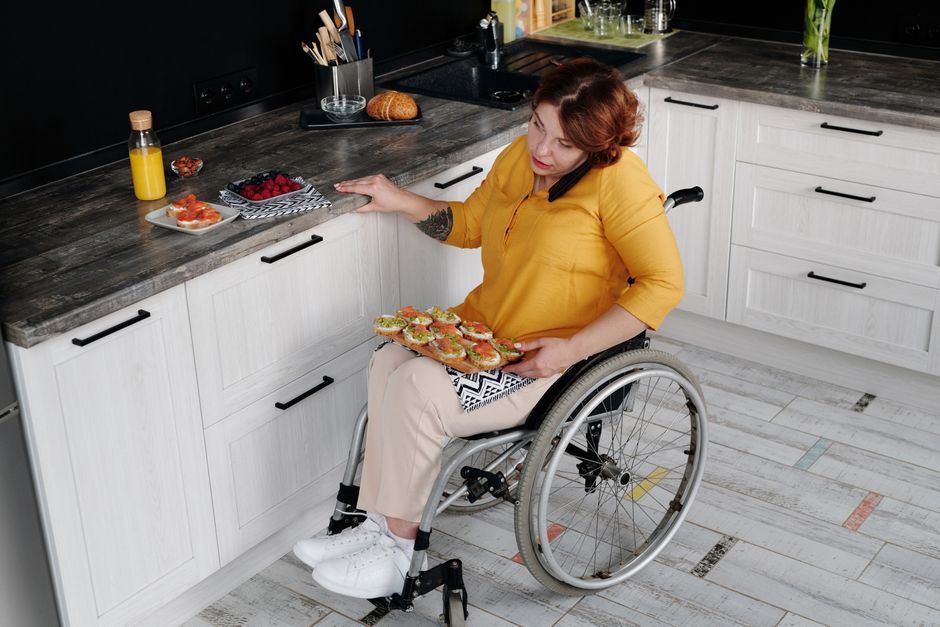
Creating a home that genuinely supports independence is one of the most meaningful investments an NDIS participant or their support network can make. This article explores how adjustable height shelving can transform everyday living spaces in disability homes, from the kitchen to the bedroom and beyond.
Why Adjustable Height Shelving Matters in Disability Homes
For many people living with a disability, access to everyday items is not simply a matter of convenience. It is a question of dignity, safety and genuine independence. Fixed shelving designed for an average-height, able-bodied person can place essential items frustratingly out of reach for wheelchair users, people with limited mobility or those managing chronic fatigue conditions. Adjustable height shelving addresses this directly by allowing storage solutions to be configured around the person, not the other way around.
At Innergrowth Hub, a registered NDIS support provider in Sydney, the goal is always participant-led living. That philosophy extends naturally into the physical environment where participants spend their daily lives. When a kitchen or bathroom is set up to match a person's actual reach and movement patterns, support workers can step back and let the individual do more for themselves.
Consider the kitchen cabinet as a starting point. Standard cabinet heights assume a standing adult, yet a significant portion of NDIS participants use wheelchairs or mobility aids at least some of the time. Shelving that can be repositioned at a moment's notice removes a daily barrier and reduces reliance on assistance for simple tasks like retrieving a cup or accessing medication.
The benefits are not limited to physical access alone. Research consistently links environmental control to improved mental wellbeing and self-confidence. When participants can organise their own spaces, reach their own belongings and make their own choices without waiting for help, the positive effect on overall quality of life is substantial. Adjustable shelving is, in this sense, far more than a practical fixture. It is a tool for empowerment.
Key Features to Look for in Accessible Shelving Systems
Choosing the right adjustable height shelving for a disability home goes well beyond picking something that looks tidy. The features built into a shelving system can directly affect how independently a participant moves through their own space each day. When supporting someone toward greater autonomy, as Innergrowth Hub does across its daily living and household task services, the practical details matter enormously.
- Height adjustability range: Look for systems that accommodate both seated and standing users, ideally spanning roughly 400 mm to 1800 mm from the floor. This range suits wheelchair users, ambulant participants and support workers alike.
- Ease of adjustment: Shelves should be repositionable without specialist tools. Push-button bracket mechanisms or simple peg-and-slot rails allow participants or support workers to reconfigure storage quickly as needs change.
- Weight-bearing capacity: Each shelf should clearly state its load rating. For kitchen or bathroom storage, a minimum of 15 kg per shelf is a practical benchmark to avoid safety risks.
- Stable, anti-tip fixings: Wall-anchored systems are strongly preferred over freestanding units in disability homes, reducing the risk of toppling if a participant leans on the unit for support.
- Smooth, non-reflective surfaces: Participants with low vision benefit from matte finishes and strong colour contrast between shelf edges and walls, making items easier to locate independently.
- Rounded edges and minimal protrusions: Sharp corners and protruding brackets create injury risks, particularly for participants with limited spatial awareness or sensory processing differences.
- Compatibility with assistive accessories: Some systems accept drawer inserts, pull-out baskets or label holders, all of which can further support independent organisation and daily living routines.
Matching these features to each participant's specific goals and physical requirements is the kind of person-centred thinking that turns a simple shelving unit into a genuine support tool.
Best Adjustable Shelving Options for Different Disability Needs
Choosing the right adjustable shelving system depends heavily on a person's specific disability, daily routines and home layout. There is no single solution that works for everyone, which is why understanding the available options is so important before making any modifications.
- Wheelchair users: Wall-mounted track shelving systems with removable brackets are ideal because they allow shelves to be positioned at reachable heights (typically 400mm to 1200mm from the floor). Look for systems with a load rating of at least 15kg per shelf and smooth, rounded edges to prevent injury during transfers.
- People with limited grip or fine motor difficulties: Open shelving with pull-out drawers or baskets requires far less dexterity than reaching into enclosed cupboards. Motorised height-adjustable shelf units are also worth exploring for participants who find manual repositioning difficult.
- Those with low vision or blindness: Consistent shelf placement combined with tactile labelling makes a big difference. Adjustable shelving that can be locked firmly at a chosen height prevents accidental displacement, which helps maintain a predictable environment.
- People with fluctuating conditions (such as MS or chronic fatigue): Flexibility is key. Systems that can be reconfigured on good days and lowered during flare-ups give participants genuine control over their space.
- Children and young people with disabilities: Height-adjustable shelving that grows with the child reduces the need for costly renovations over time.
For participants living in Supported Independent Living (SIL) arrangements, shelving choices should also reflect the needs of any support workers sharing the space. Coordinating home modifications as part of a broader daily living plan is something the team at Daily Living and Personal Care can help participants think through in practical, person-centred ways.
Installation Tips and Height Guidelines for Accessibility
Getting the installation right is just as important as choosing the correct shelving system. Even the best adjustable unit will fall short if it is mounted at the wrong position or secured inadequately. Before drilling a single hole, take time to assess the specific needs of the person who will be using the space every day.
A useful starting point is the reach range recommended by occupational therapists for wheelchair users. Forward and side reach typically falls between 380 mm and 1220 mm from the floor, meaning your lowest usable shelf should sit at roughly 380 mm and your highest regularly used shelf should not exceed 1200 mm. For ambulatory users with limited mobility, a comfortable working range is generally 600 mm to 1500 mm.
Key installation tips to keep in mind:
- Fix into wall studs or use appropriate anchors rated for the expected load, especially if the shelving will hold kitchen items, medical equipment or heavy personal care supplies.
- Allow knee clearance beneath lower shelves of at least 700 mm high and 500 mm deep so a wheelchair can pull close without obstruction.
- Check that vertical track systems are perfectly plumb before tightening, as even a slight lean makes shelf brackets harder to adjust over time.
- Leave a minimum 300 mm aisle clearance around freestanding units so mobility aids can manoeuvre safely.
- Label each bracket position with a marker or tape so support workers and family members can restore shelves to the correct height after cleaning or reorganising.
At Innergrowth Hub, our support teams work closely with participants and their occupational therapists to make sure home modifications genuinely match individual goals. A well-installed adjustable shelving system promotes independence in daily living and reduces reliance on others for simple tasks, which aligns directly with participant-led planning principles.
Funding and Support Programs to Help Cover Costs
Adjustable height shelving and other home modification solutions can represent a significant upfront investment, but a range of funding programs exist to help NDIS participants cover these costs without financial stress.
- NDIS Capital Supports (Home Modifications): The NDIS funds reasonable and necessary home modifications under the Capital Supports budget. Adjustable shelving systems that improve independence and daily living may qualify, particularly when supported by an occupational therapist's recommendation.
- Assistive Technology Funding: Some powered or motorised shelving solutions fall under the Assistive Technology category within an NDIS plan. Your support coordinator can help determine the correct funding line for your specific equipment.
- State and Territory Home Modification Schemes: In New South Wales, programs such as the Home Modification and Maintenance Service provide additional support for eligible individuals who may not have full NDIS funding available for home upgrades.
- Commonwealth Home Support Programme (CHSP): Older Australians and those not yet on the NDIS may access the CHSP to fund basic home modifications that improve safety and accessibility.
- Support Coordination: A registered NDIS support coordinator, like the team at Innergrowth Hub, can help you navigate funding categories, gather supporting assessments, and submit the necessary documentation to make the most of your plan.
The key to unlocking funding is strong documentation. An occupational therapist's assessment linking your functional needs to the specific modification requested is usually essential. Quotes from certified suppliers and installers also strengthen your application considerably.
Adjustable height shelving is far more than a practical convenience. It is a meaningful step toward genuine independence inside the home. From selecting the right system to navigating NDIS funding and working with allied health professionals, every decision you make brings you closer to a living space that truly works for you. With the right support around you, building an accessible, adaptable home is an entirely achievable goal.